How Thewa Jewellery Is Made
Every Thewa piece passes through a series of specialised steps, and each one relies on skills refined over generations and an eye for the smallest detail.
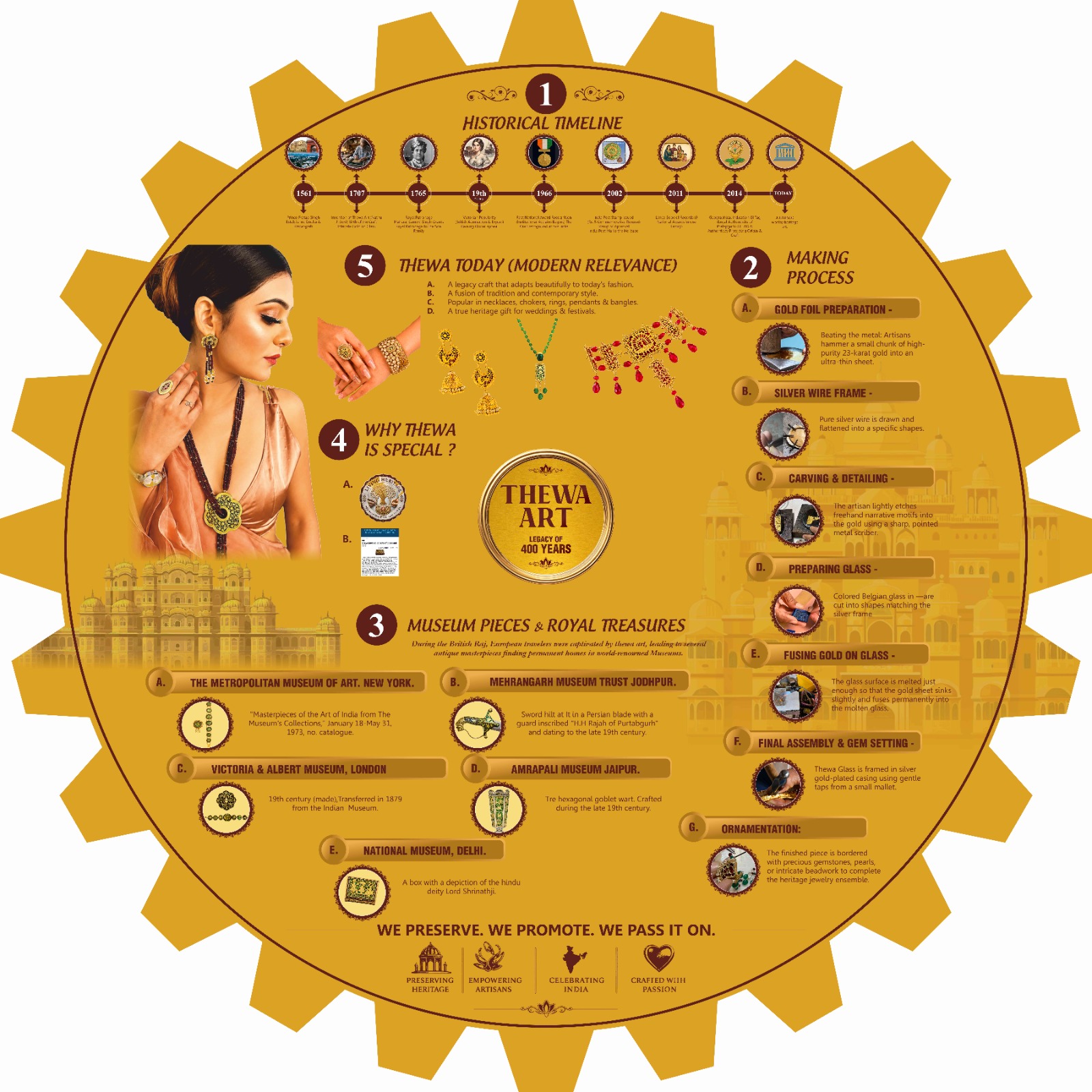
1. Preparing the Gold Foil
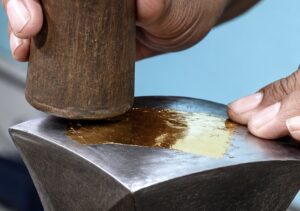
The journey starts with a modest lump of 23-karat gold. Through patient, repeated hammering, the artisan stretches it into a sheet so thin it is almost weightless.
This fragile foil becomes the canvas for all the fine artistry that comes next.
2. Hand Engraving the Gold
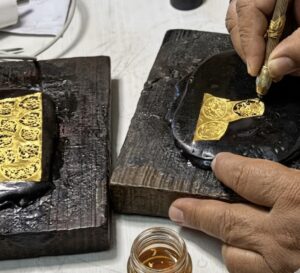
With the sheet ready, the craftsperson sets about drawing the design entirely by hand.
A sharp metal scriber is used to trace delicate motifs and story-filled scenes onto the surface of the gold. Classic Thewa patterns frequently borrow from Rajasthani culture, the natural world, local architecture, mythology and the life of the royal courts.
Accuracy matters enormously here, since even a slight slip can spoil the whole design.
3. Creating the Silver Framework
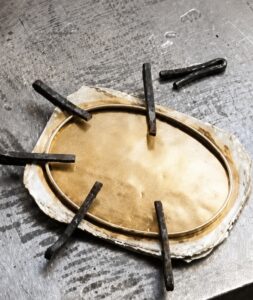
Fine silver wire is drawn out, flattened and bent into the outline the design calls for.
This silver structure forms the setting that will eventually hold the finished glass-and-gold artwork.
4. Preparing the Coloured Glass
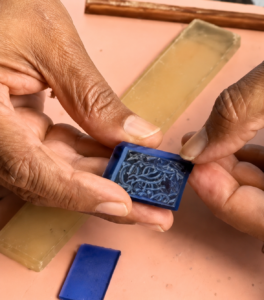
Thewa is made with specially prepared coloured glass, a material long identified with the unique look of this art form.
The glass is cut and shaped so that it sits precisely within the silver framework. Its colour is far more than decoration: it supplies the rich backdrop that makes the gold artwork stand out.
5. Fusing Gold with Glass
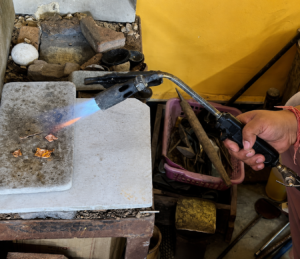
This step is among the most remarkable in the whole craft.
The glass is warmed until its surface turns soft and molten. The engraved gold sheet is then laid onto it with great care, so that it settles slightly into the softened surface.
When the glass cools and hardens, the gold is locked inside it for good, producing the gold-on-glass look that Thewa is known for.
6. Final Assembly and Gem Setting
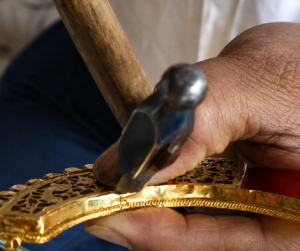
The finished Thewa glass is fitted into a casing made of silver or gold-plated metal.
The artisan taps gently and steadily with a small mallet, pressing the frame into place around the piece without cracking the glass or harming the artwork.
Depending on the design, gemstones, pearls or other embellishments may be added at this point.
7. Ornamentation
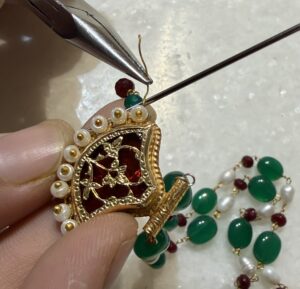
The last stage unites everything into one finished creation.
Gemstones, pearls and detailed beadwork can be arranged around the Thewa centrepiece, turning a handmade artwork into a complete piece of jewellery.
What emerges is more than an accessory. It is a wearable celebration of Rajasthan’s artistic heritage.
Thewa in Museums and Royal Collections
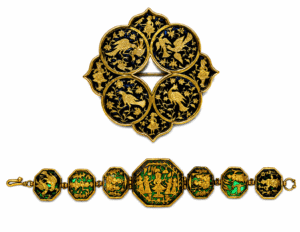
The importance of Thewa reaches well beyond the borders of Rajasthan.
During the era of British rule, travellers and collectors from Europe grew fascinated by Indian decorative arts, and Thewa works made their way into notable collections across the globe.
Today, Thewa craftsmanship can be seen in respected museums and cultural institutions, which stand as proof of the craft’s historic and artistic value.
The Metropolitan Museum of Art, New York
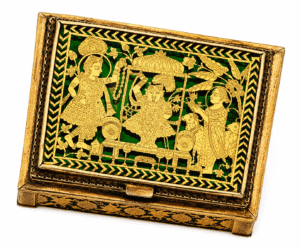
New York’s Metropolitan Museum of Art keeps Indian decorative art in its holdings, including items linked to Thewa craftsmanship.
Its 1973 exhibition, “Masterpieces of the Art of India from The Museum’s Collections”, also points to the worldwide interest in India’s artistic traditions.
Mehrangarh Museum Trust, Jodhpur
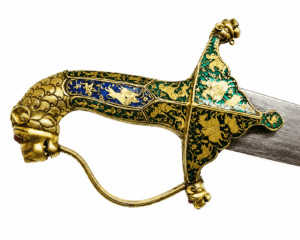
The Mehrangarh Museum Trust safeguards a large collection that captures the royal and artistic legacy of Rajasthan.
One Thewa-related object in its care is a late 19th-century sword hilt fitted with a Persian blade. Its guard carries the inscription “H.H. Rajah of Purtabgurh”.
Victoria and Albert Museum, London
The Victoria and Albert Museum ranks among the world’s foremost museums of art, design and decorative objects.
Its Indian collections feature historic pieces tied to the craft and decorative traditions of the subcontinent, including some from the 19th century.
Amrapali Museum, Jaipur
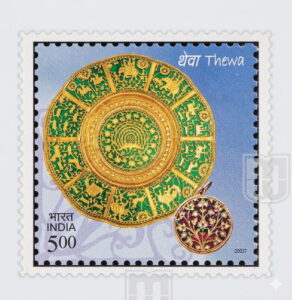
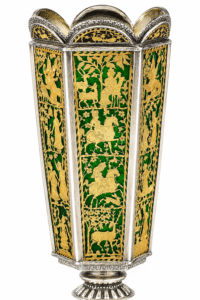
The Amrapali Museum in Jaipur displays an impressive range of Indian jewellery and decorative art.
Its collection includes historic Thewa works, such as a six-sided goblet made in the late 19th century, which shows that Thewa techniques were used on decorative objects as well as jewellery.
National Museum, New Delhi
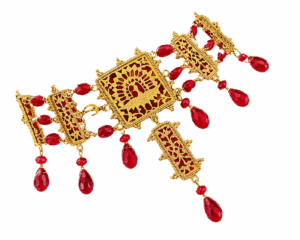
The National Museum in New Delhi protects key examples of India’s artistic and cultural legacy.
Among its Thewa holdings is a decorated box that carries an image of the deity Lord Shrinathji.
Together, these collections show that Thewa was never just a local jewellery method. Its artistry has earned a place within the larger story of Indian decorative art.
What Makes Thewa Special
A Living Heritage
The greatest strength of Thewa is that it is still actively practised.
Rather than being an art form that survives only behind museum glass, it is carried on by skilled families of artisans who hand their knowledge down from one generation to the next.
Keeping it alive means protecting not only the jewellery itself but also the techniques, skills and know-how behind every piece.
A Tradition Passed Through Generations
Thewa is closely tied to the artisan communities of Pratapgarh in Rajasthan, where this specialised skill has been nurtured for many generations.
The process cannot be mass-produced without losing the handmade character that gives each piece its individuality.
Recognised Indian Craftsmanship
Thewa has been honoured by respected awards and institutions, a sign of its place within India’s wide-ranging handicraft heritage.
Its appearance in leading museums and collections abroad has also introduced this distinctive Rajasthani craft to audiences around the world.
More Than Jewellery
Thewa is capable of far more than simple ornamental patterns.
Its gold artwork can bring to life peacocks, blossoms, leafy vines, scenes from royal life, architectural details, sacred imagery and tales from Indian tradition.
As a result, each piece feels less like standard jewellery and more like a miniature work of art.
Thewa Today: Where Tradition Meets Contemporary Jewellery
Thewa has adapted with the times while keeping its core craftsmanship intact.
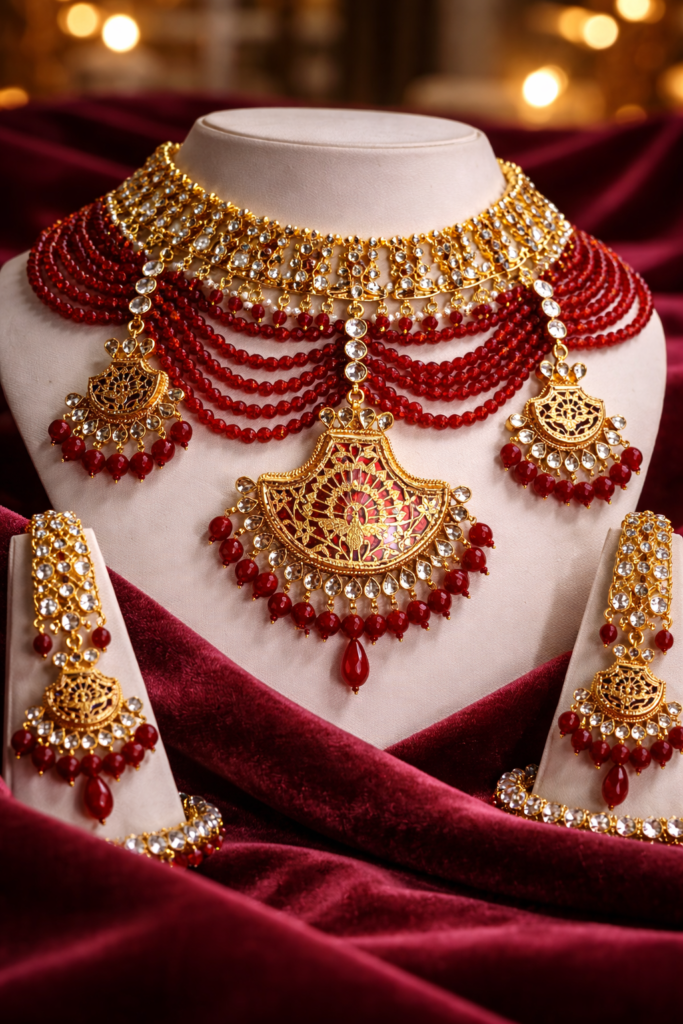
These days, the technique appears in necklaces, pendants, earrings, bracelets, bangles and many other designs, bringing traditional artistry into modern wardrobes.
Contemporary Thewa jewellery pairs time-honoured methods with styles that suit present-day occasions, from weddings and festivals to bold statement pieces for everyday elegance.
Its charm lies in that balance: the technique is firmly grounded in history, while the jewellery keeps evolving with changing tastes.
Preserving the Legacy of Thewa
Protecting Thewa means safeguarding far more than an old method of making jewellery.
It means honouring the expertise of the artisans, backing traditional craftsmanship, and making sure younger generations can keep learning the skills needed to create it.
At its core, Thewa is a bond between gold, glass, craftsmanship and cultural storytelling, one that has lasted for centuries.
Safeguard. Support. Share.
Safeguarding our heritage.
Supporting the artisans.
Honouring India.
Made with devotion.
The tale of Thewa is, in the end, a tale of continuity: an age-old craft kept alive by human hands, handed down through families, and reimagined for today’s world.