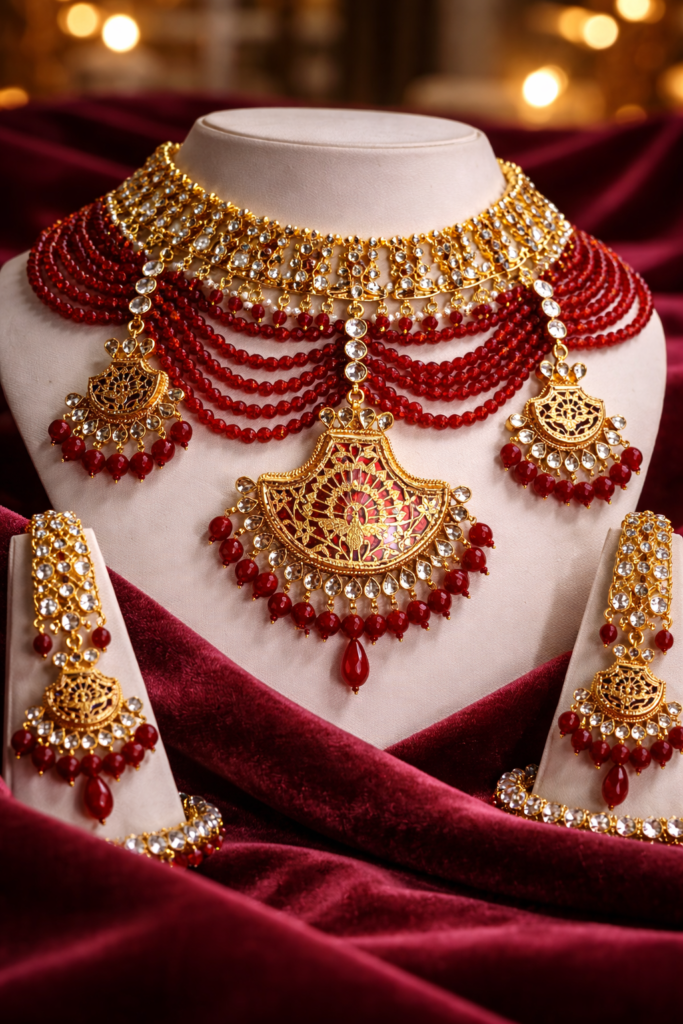
Have you ever wondered how a beautiful jewellery piece can look like a painting made with gold and glass? That is what makes Thewa Jewellery so special. Its colourful glass base, delicate gold designs and traditional patterns give it a look that is different from ordinary jewellery.
Many people admire Thewa Jewellery but do not know where it comes from or how it is made. Some know it as a traditional Rajasthani craft, while others are drawn to its beautiful designs. But there is much more to this jewellery than its appearance.
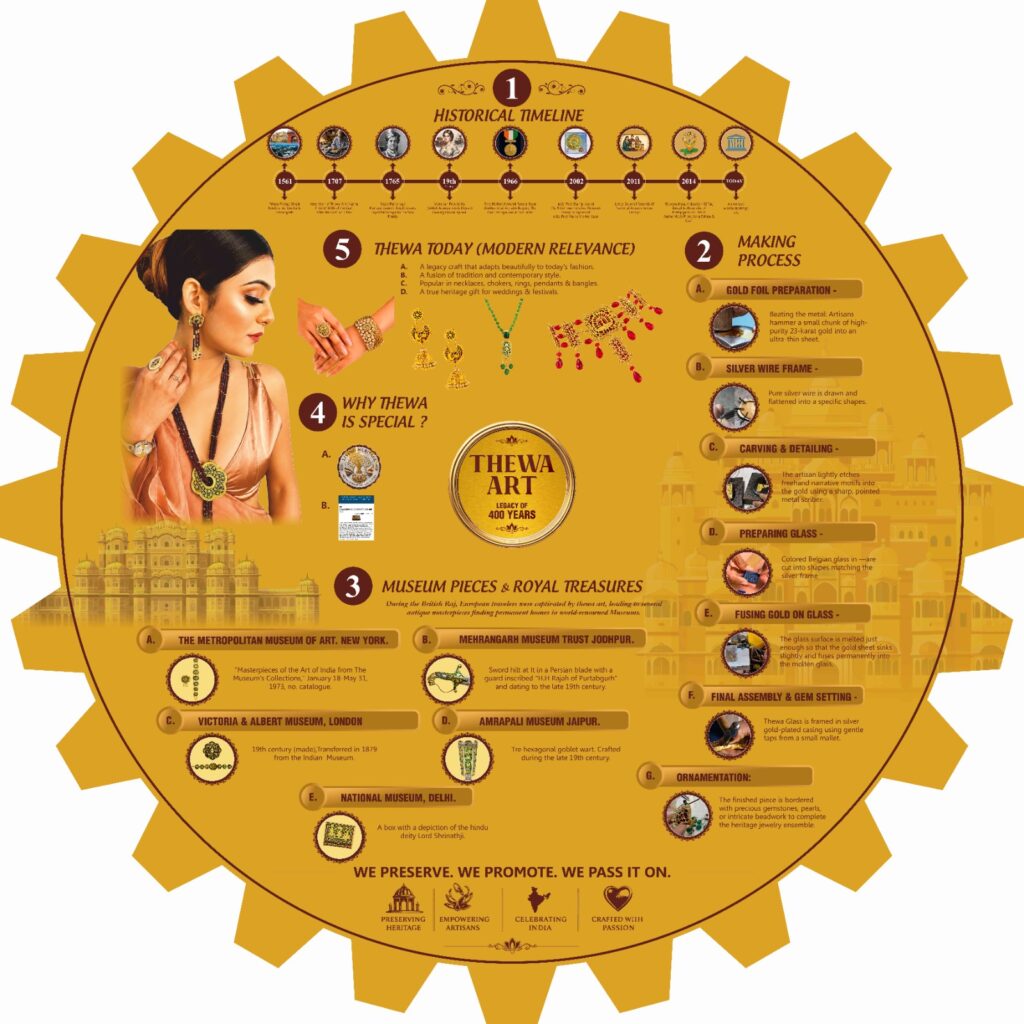
Thewa art has a history of around 400 years and originated in Pratapgarh, Rajasthan. It is also recognised as a Geographical Indication (GI)-registered craft, with registration dating back to 2014. This recognition highlights its connection with the region and the artisans who have kept the craft alive.
Let’s understand What is Thewa Jewellery, how this traditional art developed and what makes it special even today.
What Is Thewa Jewellery?
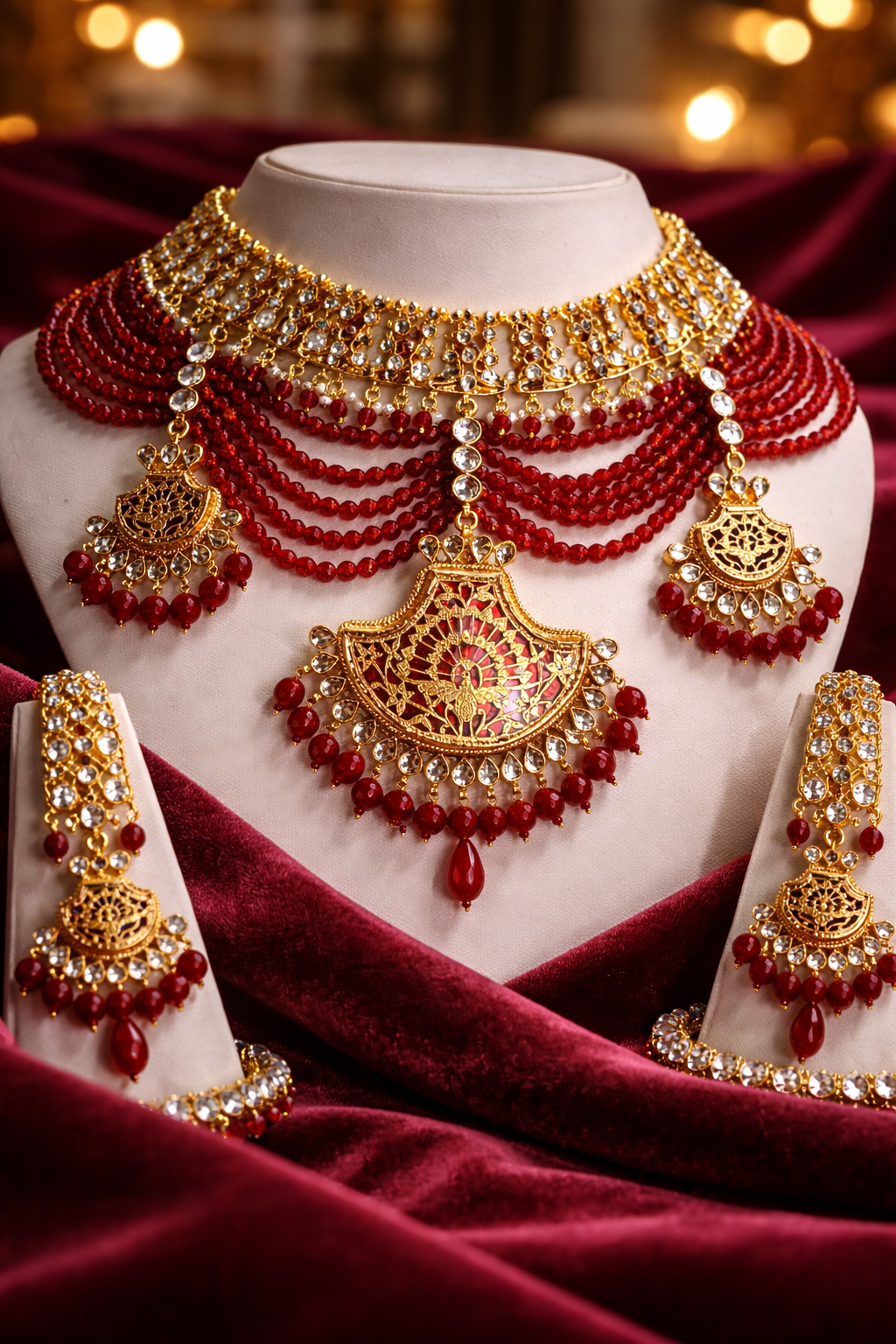
Thewa Jewellery is a traditional Indian jewellery art in which finely crafted 23-karat gold designs are combined with colourful glass. It originated in Pratapgarh, Rajasthan, and is known for its detailed gold patterns and beautiful glass backgrounds.
Unlike regular jewellery, where gold is often used as the main material, Thewa uses gold to create delicate artwork. Artisans carefully cut and shape thin gold sheets into different patterns before combining them with specially prepared glass.
The glass provides a colourful background, while the gold work creates detailed designs on its surface. Together, they give Thewa Jewellery its distinctive appearance.
Some popular forms of Thewa Jewellery include:
- Necklaces and pendants
- Earrings and jhumkas
- Rings and bracelets
- Mang Tikkas
- Traditional jewellery sets
Each piece reflects the time and skill involved in creating this traditional art. This is what makes Thewa a special choice for people who appreciate handmade Indian jewellery.
History of Thewa Jewellery: Where Did This Art Begin?
The History of Thewa Jewellery goes back around 400 years to Pratapgarh in Rajasthan. This traditional craft developed during the Mughal period and became known for its beautiful combination of gold artwork and coloured glass.
The craft is closely associated with the Rajsoni family, whose generations have helped preserve its traditional techniques. Historical accounts connect its development with artisan Nathu Lal Soni and the royal patronage of Maharaja Sumant Singh of Pratapgarh.
Thewa received appreciation for its detailed designs and skilled workmanship. Its popularity grew as artisans continued to create jewellery and decorative pieces inspired by Indian culture, nature and royal life.
Over the years, this art passed from one generation to another. Even today, traditional artisans continue to use their knowledge and skills to keep Thewa craftsmanship alive.
The craft also received Geographical Indication (GI) recognition in 2014. This recognition gives importance to its regional identity and helps protect the traditional art associated with Pratapgarh.
How Is Traditional Thewa Jewellery Made?
Traditional Thewa Jewellery is made through a careful process that combines gold artwork with coloured glass. Every stage requires patience, attention to detail and skilled hands. Unlike machine-made jewellery, the designs are created through traditional handwork.
Here are the main steps involved in making Thewa Jewellery.
1. Preparing the Gold Sheet
Artisans begin by taking 23-karat gold and carefully beating it into a very thin sheet. This sheet is used to create the detailed designs that make Thewa jewellery recognisable.
2. Creating the Designs
The artisan draws patterns on the gold sheet and carefully cuts them using special tools. These designs often include flowers, peacocks, birds, royal figures and scenes from Indian stories.
Even a small design requires a steady hand because the gold work is extremely delicate.
3. Preparing the Coloured Glass
A specially prepared glass base is selected for the design. Traditional Thewa pieces commonly feature colours such as red, green and blue.
The glass gives the gold artwork a beautiful background and makes its details stand out.
4. Bringing Gold and Glass Together
This is the most important stage of Thewa craftsmanship. The finely cut gold design is carefully fused with the prepared glass using a traditional technique.
The artisan must work with great care to ensure that the gold artwork and glass come together properly.
5. Giving the Jewellery Its Final Shape
Once the gold artwork is ready, it is placed into a jewellery setting. Depending on the design, it can become a necklace, pendant, pair of earrings or another beautiful ornament.
The finished piece brings together the beauty of gold, the colours of glass and the skill of the artisan.
What Makes Rajasthani Thewa Art Unique?
Rajasthani Thewa Art is unique because it combines delicate gold work, colourful glass and traditional Indian designs in one craft. Its beauty comes from the way these elements work together to create detailed artwork.
Here are four things that make this art different.
1. Delicate 23-Karat Gold Work
Thewa uses 23-karat gold to create fine patterns and designs. Artisans turn thin gold sheets into detailed artwork, giving every piece its own character.
2. Beautiful Coloured Glass
Red, green and blue glass are commonly used in traditional Thewa designs. These colours create a rich background that makes the gold patterns more noticeable.
3. Designs Inspired by Indian Culture
Thewa designs often feature flowers, peacocks, animals, royal scenes and traditional stories. These patterns reflect the culture and artistic traditions of Rajasthan.
4. Skilled Handcrafted Work
Every design requires careful cutting, shaping and finishing. The detailed work cannot be separated from the artisan’s experience and knowledge of the craft.
These qualities make Thewa more than just another jewellery style. It is a traditional art form that carries the creativity and history of Rajasthan.
Why Is Thewa Jewellery Still Popular Today?
Thewa Jewellery continues to attract jewellery lovers because it offers something different from modern, mass-produced designs. Its traditional artwork, colourful appearance and connection with Indian heritage make it special for people who enjoy unique jewellery.
Here are some reasons why people still love it:
- Traditional Beauty: Its connection with Rajasthan’s heritage makes it meaningful for people who appreciate Indian art and culture.
- Unique Designs: The combination of gold and coloured glass gives it a look that is not commonly found in other jewellery styles.
- Suitable for Special Occasions: Thewa necklaces, earrings and pendants look beautiful with sarees, lehengas and other traditional outfits.
- A Mix of Old and New: Its traditional designs can also be styled with modern ethnic and fusion clothing.
- Thoughtful Gifting: A handcrafted Thewa piece can make a special gift for weddings, festivals and family celebrations.
Its lasting appeal comes from the fact that traditional craftsmanship never needs to follow changing fashion trends to remain beautiful.
How to Style Thewa Jewellery with Different Outfits?
Thewa Jewellery can be styled with both traditional and contemporary outfits. The key is to choose a design that matches the occasion and the outfit without making the overall look too heavy.
Here are some simple styling ideas:
For Weddings: Pair a statement Thewa necklace with a saree or lehenga. Choose matching earrings to complete the traditional look.
For Festivals: Thewa pendants and earrings look beautiful with anarkalis, kurta sets and other festive outfits.
For Family Functions: A pair of detailed Thewa earrings can add colour and character to a simple ethnic outfit.
For Contemporary Looks: Smaller Thewa pendants or earrings can be paired with fusion wear to create a balanced look.
If you are wearing a statement necklace, keep your other accessories simple. This allows the beautiful gold and glass detailing to stand out.
Discover Traditional Thewa Jewellery at Sonkanch
At Sonkanch, we celebrate the beauty of Traditional Thewa Jewellery and the craftsmanship that makes this art so special. Inspired by Rajasthan’s rich jewellery heritage, our designs bring traditional artistry into a style that feels beautiful today.
The intricate gold work, colourful glass and detailed patterns reflect the creativity behind this centuries-old craft. Whether you are looking for a special piece for a celebration or jewellery that adds something unique to your collection, Thewa offers a beautiful way to appreciate Indian heritage.
Explore Thewa Jewellery at Sonkanch and discover designs that bring together tradition, artistry and timeless beauty.